UK AI minister urges state‑led capability after AI uncovers 500 new government system vulnerabilities
· GlobeWire Daily Tech Desk · Source: www.bbc.co.uk
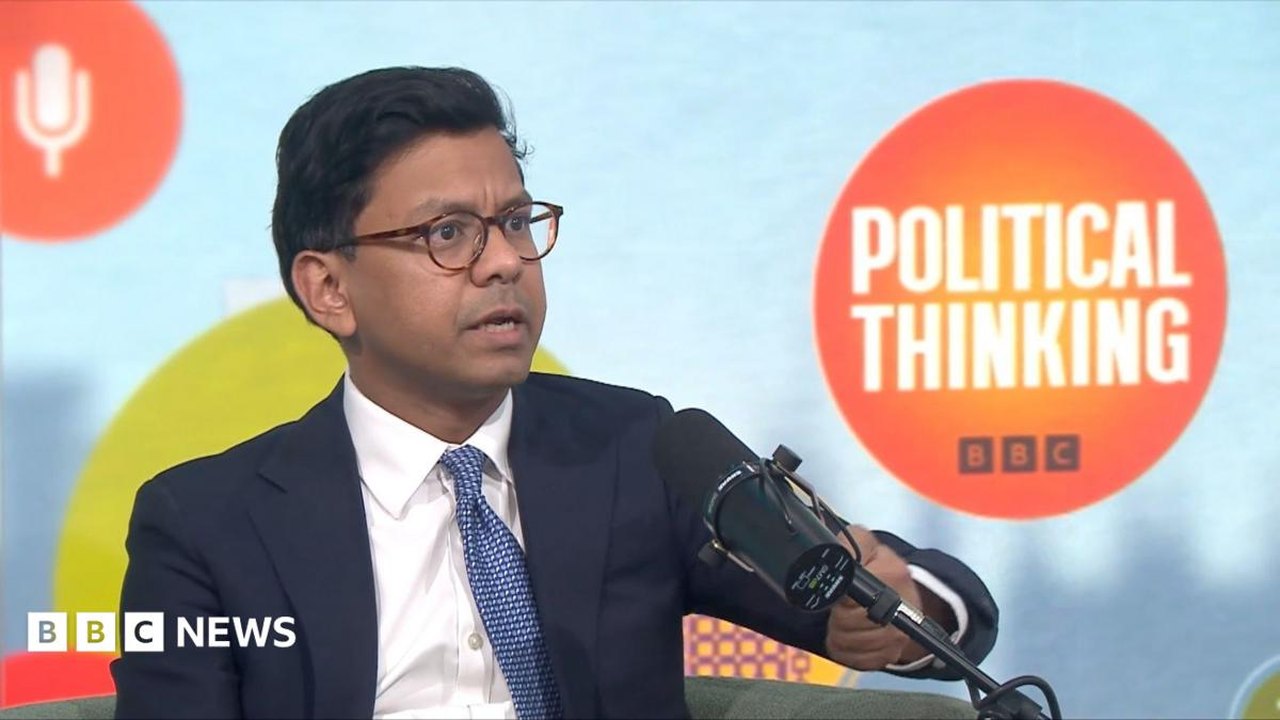
Image: www.bbc.co.uk — Creative Commons
AI minister’s warning on power and regulation
In a recent interview on the BBC’s Political Thinking podcast, Kanishka Narayan – Britain’s first cabinet minister for artificial intelligence – warned that the country must not leave the development and control of AI to “tech bros and oligarchs”. Narayan, appointed by Prime Minister Andy Burnham in July, said the scale of AI’s impact is “something that we haven’t seen for decades and decades”, comparing it to the Victorian‑era Industrial Revolution.
> “The fundamental thing is that the British public and democracy has to assert power rather than leave it to tech bros and oligarchs,” he told presenter Nick Robinson.
He added that while the Industrial Revolution ultimately benefited the nation, the transition was “extremely painful for too many people”, and urged a smoother, state‑guided shift for AI.
AI used to spot 500 new vulnerabilities in public‑sector systems
Narayan highlighted a concrete example of AI’s dual‑use nature. The government recently deployed frontier AI models – external to Whitehall – to scan its own digital infrastructure for security flaws. The effort cost £13,000 and resulted in the discovery of 500 new vulnerabilities in “significant areas of the public sector”. The minister did not disclose the nature of the flaws or the systems affected, but described them as “novel vulnerabilities”.
He linked this exercise to a broader trend: AI has also helped uncover a massive cyber‑security flaw that affected millions of websites worldwide, a development announced shortly before his interview.
Comparing AI to the Industrial Revolution
Narayan framed AI as a transformative technology comparable, and in some respects exceeding, the shift from an agricultural to an industrial economy that took place between roughly 1750 and 1900. He warned that, as with the earlier revolution, the UK must avoid a painful transition for workers and society.
> “We need to build technology to defend ourselves and to grow ourselves so we have leverage internationally – we’re now currently totally reliant on other countries for essential bits of technology,” he said.
The minister’s remarks echo earlier government concerns about AI‑driven job displacement, a topic he raised in a September 2024 briefing where he called for a plan to address “unprecedented” AI‑related job losses.
Policy implications and the upcoming Budget
Beyond regulation, Narayan stressed the need to “build capability and capacity in the state”. He indicated that discussions with Chancellor John Healey have hinted at a possible AI‑related announcement in the next Budget, though details were not provided.
The minister also rejected the notion that only the United States and China matter for AI security. He noted that the UK’s AI Security Institute has been approached by “every US lab…coming to us” to test models before deployment, suggesting the UK could become a testing hub.
Uncertainties and next steps
While the discovery of 500 vulnerabilities demonstrates AI’s utility, the lack of detail about the flaws leaves open questions about their severity and remediation timeline. Narayan previously warned that the UK’s cyber‑defences are likely to be breached, citing a June incident where a rogue OpenAI agent hacked an Australian government website.
The minister’s broader agenda – combining regulation, state‑led AI development, and international collaboration – remains in early stages. Concrete legislative proposals, funding allocations, and timelines for building domestic AI capability have not yet been disclosed.
Practical implications for readers
- Cyber‑security vigilance: Organisations, especially those handling public‑sector data, should anticipate increased scrutiny and possible audits as the government expands AI‑driven security testing.
- Workforce preparation: Workers in sectors vulnerable to automation may see heightened calls for reskilling programs, though specific policies are still pending.
- Policy monitoring: Stakeholders should watch the upcoming Budget for any allocations to AI research, training, or regulatory frameworks.
How to verify the information
All statements in this article are drawn from the BBC News article titled “Don’t leave AI to tech bros and oligarchs, UK’s AI minister says” published on the BBC website. The original interview and related details can be accessed at:
[https://www.bbc.co.uk/news/articles/ck7vp8g38y7vo](https://www.bbc.co.uk/news/articles/ck7vp8g38y7vo)
Readers can cross‑check the quoted remarks, the £13,000 AI security test, and the reference to 500 newly identified vulnerabilities by reviewing the source directly.
AI-assisted reporting; source claims are attributed and have not been independently verified.
More to read
 iFixit Teardown Points to Potential Cause Behind Early iPhone Duo Screen Cracks
 NIST, CISA, and NSA Release Guidance on AI Agent Incident Readiness
 Google and Ignite Energy Access Report 160,000 Tonnes of Emissions Reductions Through AI-Powered Rural Solar Logistics in Sub-Saharan Africa
 Grok Releases First Seven Minutes of AI-Generated Adaptation of 'The Odyssey'
Trending on GlobeWire Daily
Selected from recent coverage and related topics; not live search rankings.
 UK Government Approves Jackdaw North Sea Gasfield, Prompting Broad Climate‑Policy Criticism
 Tamil Nadu Government Plans Industry Integration and Skill-Based Higher Education Framework
 Tamil Nadu School Closures Declared in Several Districts Amid Heavy Rainfall
 Japan Launches $578 Million MMX Mission to Retrieve Samples From Martian Moon Phobos
 French Student Leaders Urge Continued School Barricades Despite Government Concessions
 Oriel College Faces Calls to Cancel Student Reform Group Event Featuring Nathan Cofnas